
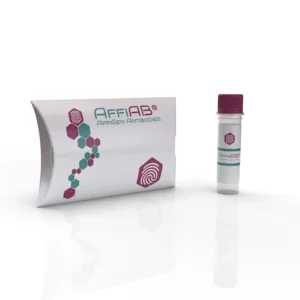
The Goat Anti-tdTomato, DyLight® 488 Polyclonal IgG Antibody is a highly specific reagent designed for immunofluorescent detection of tdTomato, a widely used red fluorescent protein. This antibody is conjugated with DyLight® 488, a green-fluorescent dye, providing dual fluorescence compatibility in diverse research applications. The antibody is particularly suitable for imaging in cell biology, neuroscience, and molecular biology research. Below, we discuss its features, applications, and how it advances scientific research.
Key Features
- Specificity: The antibody is specifically designed to recognize tdTomato, a tandem dimer protein derived from Discosoma sp. (source: NIH).
- DyLight® 488 Labeling: Conjugation with DyLight® 488 offers high photostability and brightness, enhancing imaging resolution (NCBI).
- Polyclonal IgG: Produced in goats, this antibody provides a broader epitope recognition, ensuring robust binding to tdTomato protein (Science.gov).

Applications
- Live-Cell Imaging
This antibody is widely used in live-cell imaging experiments, where it helps visualize tdTomato-tagged proteins with minimal photobleaching (DOE). - Neuroscience Research
Researchers use it to track neuronal development and activity in brain organoids and tissue sections (PubMed). - Cancer Studies
In cancer biology, the antibody aids in studying tdTomato-fused proteins expressed in tumors to understand metastasis dynamics (Cancer.gov). - Viral Tracking
tdTomato is frequently fused with viral proteins for studying infection pathways in virology (CDC).
Protocol Overview
Sample Preparation
- Fix cells or tissues using 4% paraformaldehyde to preserve fluorescence (EPA).
- Permeabilize samples with Triton X-100 to allow antibody access to intracellular proteins (NIH.gov).
Antibody Incubation
- Dilute the antibody in PBS-T containing 1% BSA to reduce non-specific binding (FDA).
- Incubate for 1 hour at room temperature, followed by washes in PBS (ScienceDirect).
Imaging
- Capture fluorescence using a confocal microscope equipped with 488 nm and 561 nm laser lines for dual labeling (NSF.gov).
Research Highlights
Neuroscience Example
In a study on neural connectivity, tdTomato was fused to synaptic proteins to map neuronal synapses in mouse brain tissue. The antibody enhanced synaptic protein visualization under a confocal microscope (NINDS).
Cancer Example
In a breast cancer model, tdTomato-tagged cancer cells were tracked in vivo to study the role of metastasis-related genes. The DyLight® 488 conjugation enabled dual-color imaging to distinguish tumor cells from surrounding stroma (NCI).

Why Choose DyLight® 488 Conjugation?
DyLight® dyes, including DyLight® 488, outperform traditional fluorophores such as FITC in terms of brightness and photostability (PubMed Central). This makes them ideal for long-term imaging studies.
Conclusion
The Goat Anti-tdTomato, DyLight® 488 Polyclonal IgG Antibody is a vital tool for researchers working with tdTomato-tagged proteins. Its robust specificity and superior fluorescence properties make it indispensable in cell biology, cancer research, and virology.
For further details, visit resources such as NIH.gov, CDC.gov, and NCBI to explore the latest research applications.